Insulated Ash Screw Conveyors with Heat Tracing
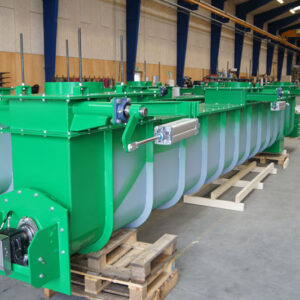
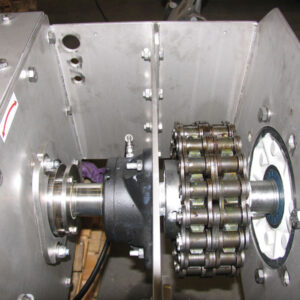
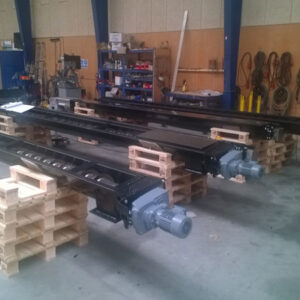
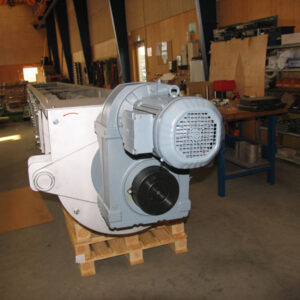
Insulated ash screw conveyors with heat tracing – 39440, designed and manufactured for a customer in the power plant sector.
For this installation, BEMA delivered a complete solution consisting of specially designed tubular screw conveyors to ensure stable and reliable transport of ash in an environment with significant temperature fluctuations and a high risk of condensation.
To meet the customer’s requirements for high operational reliability, the conveyors were equipped with redundant heat tracing, followed by 50 mm mineral wool insulation and a robust outer cladding that protects the installation and maintains the required operating temperature. The combination of double heat tracing and effective insulation ensures that the conveyors never drop below the dew point, which is essential to avoid condensation, material buildup, and operational downtime.
See similar case for ash transport here
Customer Challenge
The customer faced a process where ash transport needed to operate reliably year‑round, regardless of ambient temperatures and humidity levels. When the temperature inside tubular conveyors drops below the dew point, condensation forms on the inner surfaces, causing ash to clump and adhere. This can lead to blockages, increased wear, corrosion, and unplanned shutdowns.
Additionally, the customer required a solution that could be integrated into the existing plant while remaining energy‑efficient, robust, and long‑lasting. This placed high demands on construction, material selection, and temperature control.
BEMA’s Solution
BEMA developed a series of tubular screw conveyors equipped with double heat tracing. This redundant configuration means that two independent heating systems operate in parallel. If one system fails, the other maintains the required temperature, significantly increasing operational reliability and extending the overall service life of the installation.
The heating cables were mounted directly onto the pipes to ensure even and controlled heat distribution along the entire conveyor length. The system is dimensioned to prevent temperatures from dropping below the dew point – a critical factor in avoiding condensation and subsequent operational issues.
After installing the heating cables, the conveyors were fully insulated with 50 mm mineral wool, chosen for its high insulation performance, fire safety, and stability in industrial environments. The insulation was finished with a protective cladding that reduces heat loss and shields the system from mechanical impact, moisture, and wear.
The solution was tailored to the customer’s installation dimensions, capacity requirements, and operating conditions. BEMA’s construction ensures optimal heat distribution and year‑round trouble‑free operation, even at low ambient temperatures.
Results and Benefits
The final solution provides the customer with significantly improved operational stability. Double heat tracing ensures a high level of redundancy and extends the installation’s service life. By keeping the conveyors above the dew point, condensation is avoided, reducing the risk of blockages and unplanned downtime.
The effective insulation minimizes energy consumption and ensures a uniform temperature profile. At the same time, the robust cladding provides long service life and minimal maintenance.
Overall, the customer gains a solution that improves operational efficiency and increases plant safety.
FAQ – Insulated Ash Screw Conveyors with Double Heat Tracing
Purpose of double heat tracing Double heat tracing ensures that the tubular conveyors remain above the dew point, even if one heating system fails. The redundancy increases operational reliability and extends the installation’s lifespan.
Benefits of 50 mm mineral wool insulation Mineral wool provides high insulation performance, stability, and fire safety. It reduces heat loss, protects the heating cables, and ensures energy‑efficient operation in demanding industrial environments.
Robustness and service life The cladding around the insulation protects against mechanical impact, moisture, and wear. The combination of double heat tracing, insulation, and cladding provides a long‑lasting solution with minimal maintenance.
Operational cost benefits By preventing condensation and blockages, the need for repairs and unplanned shutdowns is reduced. Stable operation improves plant capacity utilization and lowers overall operating costs.
Adaptation to the customer’s plant The solution is dimensioned according to specific installation requirements, capacities, and environmental conditions. BEMA ensures that heating performance, insulation thickness, and material selection match the customer’s process needs and operating environment.
Insulated ash screw conveyors with heat tracing
- Diameter of screw rotor: Ø290
- Length: 4,300 – 6,000 mm
- Materials:
- Housing manufactured in stainless steel 1.4301
- Screw rotor manufactured in carbon steel 1.0570 S‑355 with flights in Hardox‑450
- Surface treatment: All stainless‑steel components are acid‑pickled after manufacturing. The tubular screw conveyors have been heat‑traced after manufacturing
- Finally, the conveyors are insulated with 50 mm mineral wool and fitted with a protective outer cladding.
| Applied steel in product | Stainless steel |
|---|---|
| Industry | Energy, biomass and bioenergy handling |
| Product type | Screw conveyor |
| Surface treatment | Stainless steel – acid pickled |
| Transported material | Ash |